

You’ve been hearing God’s Word for two weeks. Now comes the best part: living it.
We’re halfway through the MyBibleIQ 30-Day Challenge. If you’ve shown up, even some of the days, you’ve heard a lot of Scripture: devotionals, quizzes, stories, and questions.
That matters. But James reminds us that hearing is only the beginning.
Before you start week three, pause and look back.
What’s one verse, story, or idea that stuck with you? Maybe it was Noah waiting for God’s word, the Bereans checking the Scriptures, or a quiz question that surprised you.
Write it down. You’ll use it in a minute.
Being Doers of the Word
James puts it plainly: “But prove yourselves doers of the word, and not just hearers who deceive themselves” (James 1:22).
He compares a hearer who doesn’t act to someone who looks in a mirror, walks away, and forgets what he looks like (James 1:23–24). The Word showed him something, but nothing changed.
The doer is different. James says that person “will be blessed in what he does” (James 1:25).
What does it mean to be a doer of the word?
Being a doer of the word means putting what Scripture teaches into practice, not just reading or hearing it. James 1:22 warns that hearing without doing leads us to deceive ourselves. This is why Bible knowledge matters in everyday life: it’s meant to shape how we live.
So, what does being a doer look like? Jesus showed it in a story. A lawyer asked Him how to inherit eternal life, answered correctly, and heard Jesus say, “do this and you will live” (Luke 10:28). The lawyer knew the right answer. But then he asked, “And who is my neighbor?” (Luke 10:29).
In Jesus’ story, a man is beaten and left on the road. A priest and a Levite see him and pass by on the other side. But a Samaritan “felt compassion” (Luke 10:33), bandaged his wounds, brought him to an inn, and paid for his care.
When Jesus asked who proved to be a neighbor, the lawyer answered, “The one who showed compassion to him.” Jesus replied, “Go and do the same” (Luke 10:37).
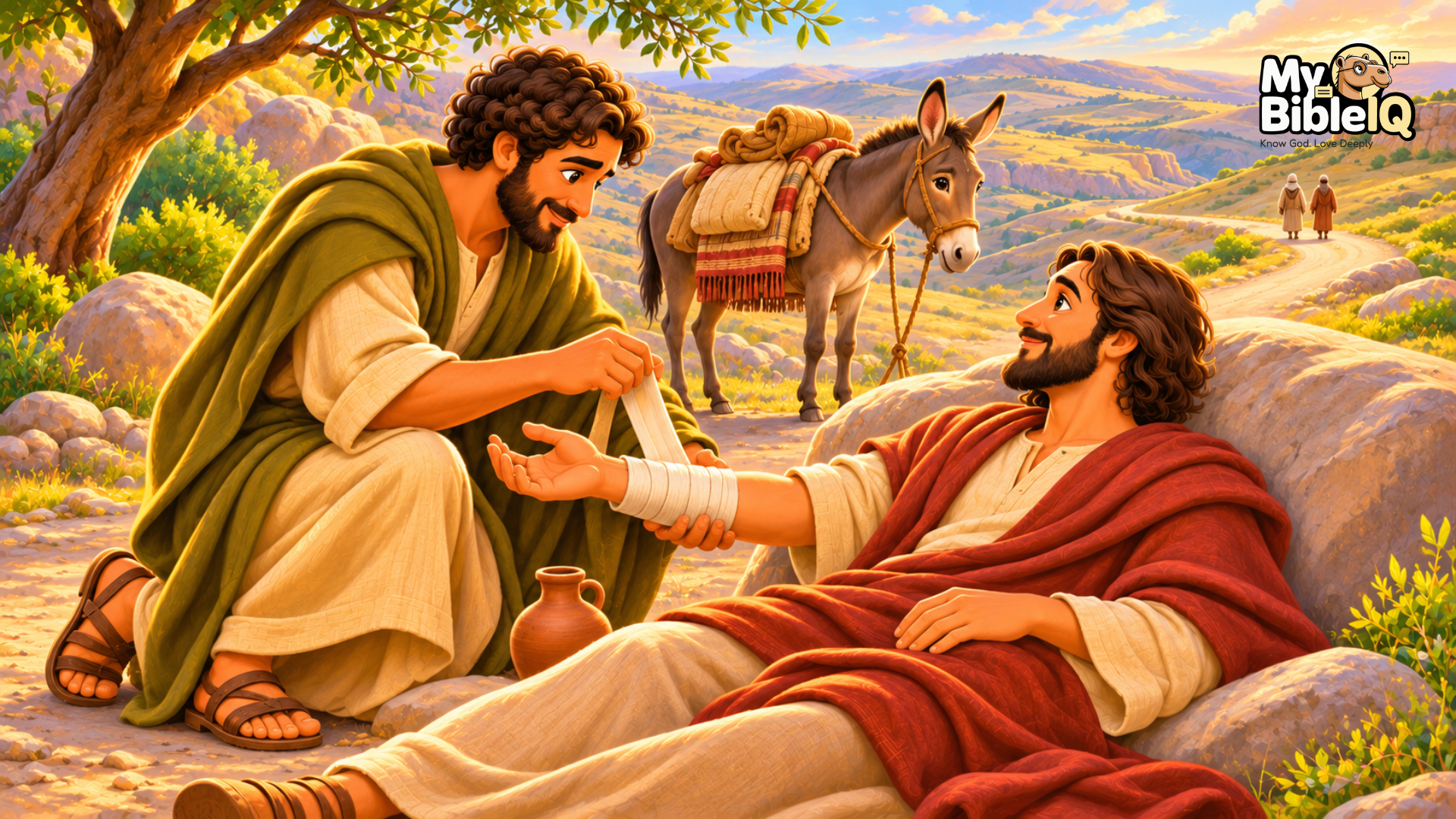
The Good Samaritan teaches that loving your neighbor means acting with compassion toward the person in front of you, even when it’s inconvenient. Today that might look like checking on a struggling coworker, helping a neighbor, or making time for someone others to overlook.
And if you’ve fallen behind in the challenge, you’re not disqualified. You don’t need to catch up on every missed day. Just start again today with one activity. God’s mercies are “new every morning” (Lamentations 3:23). If you need a fresh start, revisit You Don’t Need to Be a Bible Expert to Start.
For your own reflection, ask: Who has God placed on my road this week?

See it come to life
Explore what it means to move from hearing to doing in this visual overview of James 1:22 and the Good Samaritan and watch the visual overview here.
Your Next Step: One Insight, One Action
Take the insight you wrote down earlier. Now choose one action that puts it into practice this week. Keep it small and specific: a phone call, a kind word, a prayer, an act of help.
Then open MyBibleIQ and keep going with today’s activity.
Get MyBibleIQ on the App Store
Frequently Asked Questions About Living What You Learn
1. What does James 1:22 mean?
It calls believers to put God’s Word into practice. Hearing Scripture without acting on it, James says, means deceiving ourselves.
2. Who is my neighbor according to Jesus?
In the parable of the Good Samaritan (Luke 10:25–37), Jesus shows that a neighbor is anyone in need whom we can help with compassion.
3. What if I’ve missed days in the 30-Day Challenge?
Just start again today with one activity. You don’t need to make up missed days.