

Got questions about the Bible? Good. That's exactly where understanding begins.
Why did God do that? What does this word mean? Is that really what the Bible says?
Many people keep questions like these to themselves. They worry that asking means they don't have enough faith, or that everyone else already knows the answers.
But Scripture shows a different picture. Some of the most commended people in the Bible were the ones who asked, searched, and checked.
Is it okay to ask questions about the Bible?
Yes. Asking honest questions and searching Scripture for answers is a healthy part of learning. In Acts 17:11, the Bereans are praised for examining the Scriptures daily to see whether what they heard was true.
Curiosity Is a Path to Understanding
Curiosity keeps you reading. A question gives you a reason to open the Bible and a reason to keep going until you find something.
It also slows you down. When you're looking for an answer, you notice details you would usually skim, and that's often where a story comes alive.
The goal isn't to win an argument or collect trivia. It's to know God better through His Word.
The Bereans' Daily Habit
In Acts 17, Paul and Silas had to leave Thessalonica by night and traveled to Berea (Acts 17:10). There, the people listened differently.
They "received the word with great eagerness," and they examined the Scriptures daily "to see whether these things were so" (Acts 17:11). They were open and careful at the same time.
The result? "Therefore, many of them believed" (Acts 17:12). Their questions didn't pull them away from faith. Searching the Scriptures led them into it.
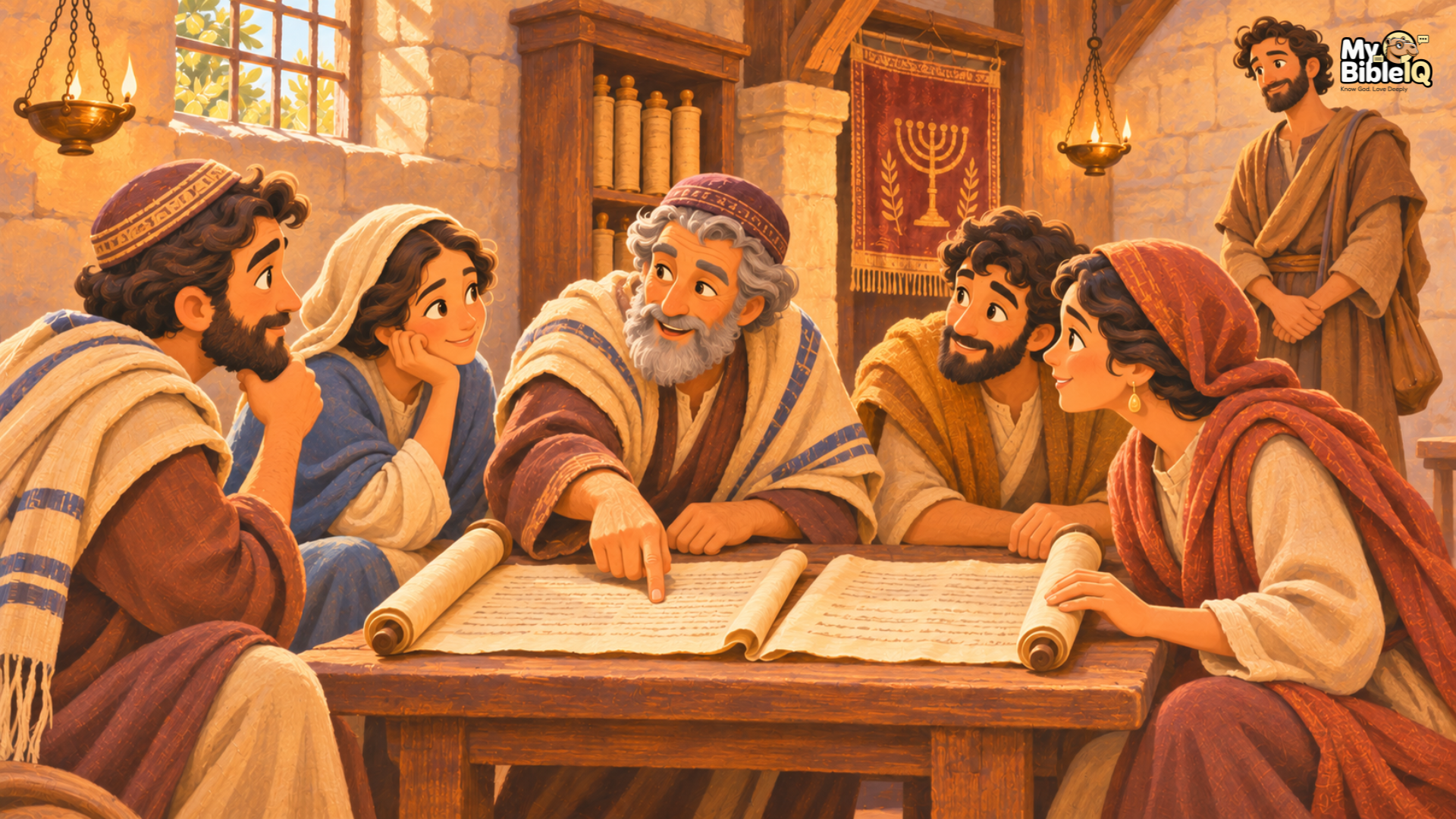
Who were the Bereans in the Bible?
The Bereans were people in the city of Berea who heard Paul and Silas teach. Acts 17:11 calls them "noble-minded" because they received the message eagerly and examined the Scriptures daily to see if it was true.
For your own reflection, ask: What question have I been carrying that I could bring to Scripture this week?
Using Quizzes and Flashcards to Learn
Quizzes and flashcards aren't just about getting the right answer. They show you what you know and point out what you don't.
A missed question is a good thing. It gives you something to go look up. A right answer gives you a detail to build on.
In MyBibleIQ, Scripture quizzes and Quest flashcards work this way. Each one connects back to a Bible passage, so every answer can send you back to the text. Want to start now? Try How Well Do You Really Know the Bible? 10 Questions to Test Your Bible IQ.
Turning Questions Into Study
Next time a question comes up, try this:
- Write the question down.
- Find the passage it comes from and read the verses around it.
- Notice who is speaking, what happens, and what is repeated.
- Check your understanding with a quiz or flashcard.
- Write what you found and any new question it raises.
One question often leads to another. That's not a problem. That's how study grows.

See Curiosity Come To Life
Explore how curiosity, the Bereans' daily habit, and simple study tools work together in this visual overview.
Watch the visual overview here.
Your Next Step: Bring One Question
Pick one question you've had about the Bible. Bring it to MyBibleIQ today: take a quiz, open a Quest, or read the passage behind it. If you're in the 30-Day Challenge, let your question guide today's activity.
Frequently Asked Questions About Bringing Questions to Scripture
1. What does Acts 17:11 mean?
It describes the Bereans, who eagerly received Paul's message and examined the Scriptures daily to check whether it was true. It encourages both openness and careful study.
2. How can quizzes help me learn the Bible?
Quizzes help you recall what you've read and show you what to study next. Each missed answer is a reason to return to the passage.
3. What should I do when I don't understand a Bible passage?
Write down your question, read the verses around the passage, and look for who is speaking and what happens. Then check your understanding with a quiz or flashcard.